
The Mahabharata Connection of Choudwar : Tracing the Matsya Kingdom in Odisha
Located near Cuttack in the state of Odisha, Choudwar is today known primarily as an industrial hub. However, beyond its modern identity lies a fascinating historical and mythological legacy that connects the region to the great Indian epic, the Mahabharata.
This lesser-known heritage site is traditionally believed to be associated with Matsya Desha, the kingdom ruled by King Virata during the Dwapara Yuga.
The Mahabharata Connection of Choudwar
According to local traditions and historical narratives, Choudwar is identified with Matsya Desha, the kingdom of King Virata. In the Mahabharata, the five Pandava brothers and Draupadi are said to have spent their year of Agyatavas (incognito exile) in King Virata’s kingdom under the guidance of Krishna.
King Virata, described as a close ally of Krishna, is believed to have ruled from this region. Folklore holds that Choudwar once served as the capital of his kingdom. Though historical verification remains limited, the oral traditions of the region continue to preserve this epic association.
Virat Gadi – The Royal Legacy
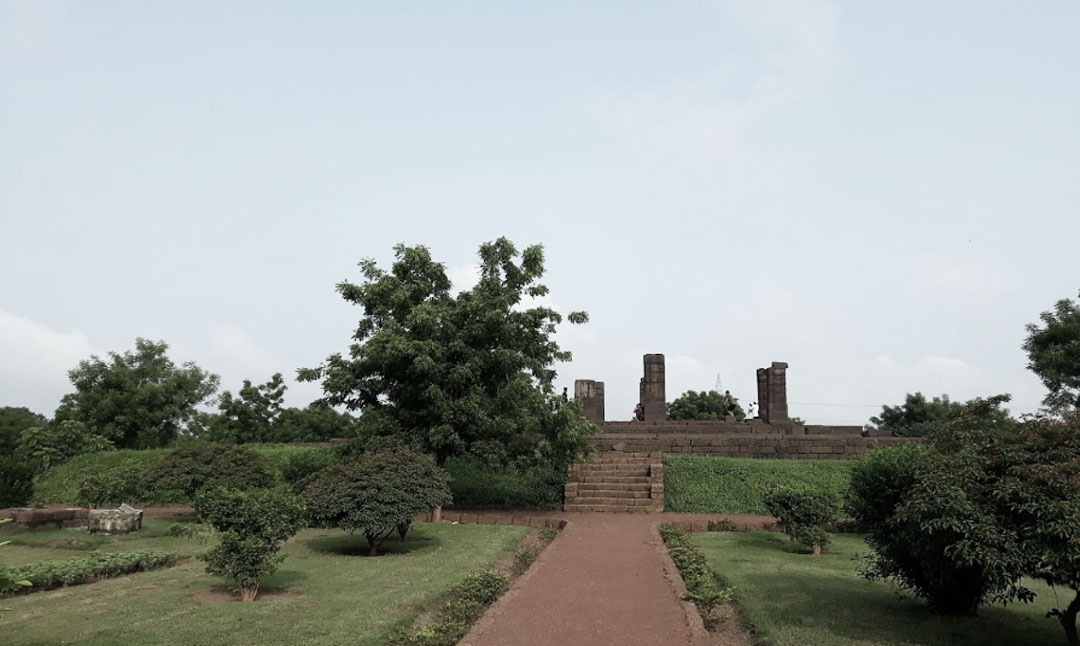
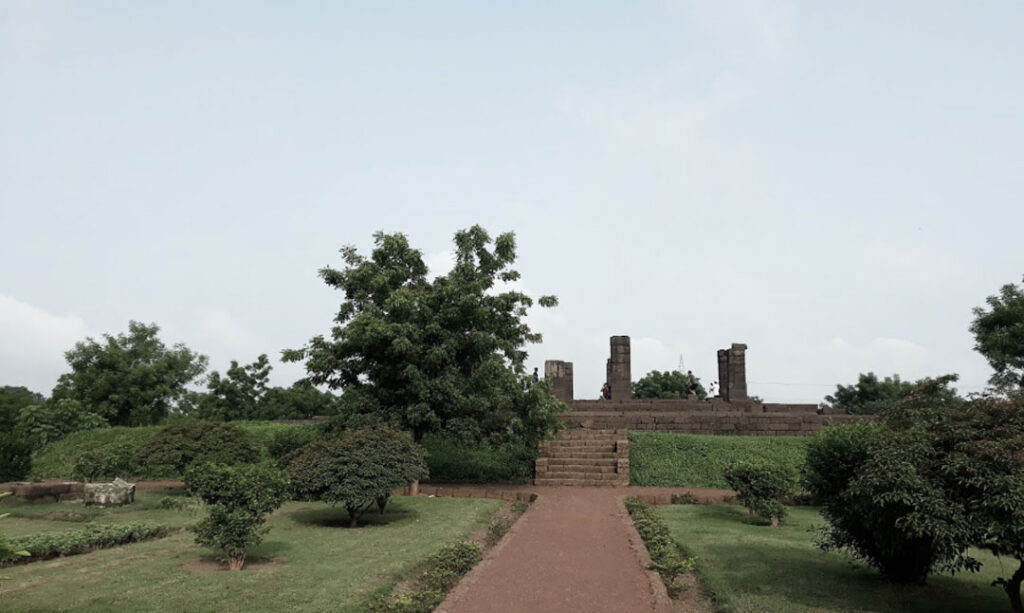
One of the most significant landmarks in Choudwar is Virat Gadi, believed to be the site of King Virata’s palace. Though now in a ruined condition, the structure stands as a protected archaeological site. The remaining pillars and architectural fragments hint at the grandeur and strategic importance the site once held.
The Astasambhu Temples of Choudwar
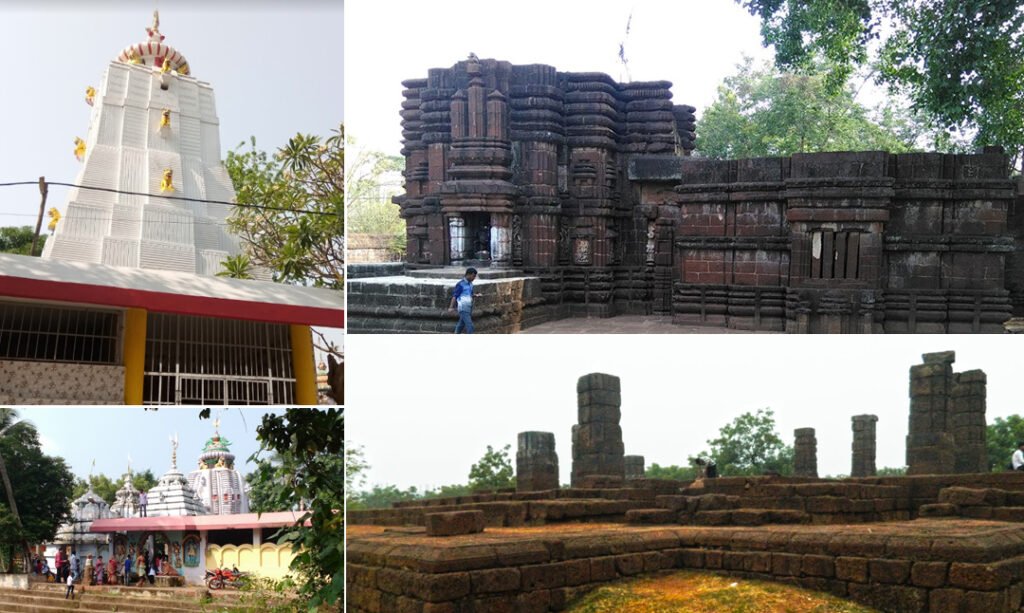
Choudwar is also renowned for the Astasambhu—a group of eight prominent Shiva temples believed to have been established during the Somavamsi period. These temples are central to the region’s religious and cultural identity.
1. Kapaleswar Temple
Built in the 10th century AD by the Somavamsis and later renovated during the Ganga dynasty period, Kapaleswar Temple is one of the Astasambhu shrines. It reflects early medieval Odishan temple architecture.
2. Kedareswar Temple (Budha Linga)
Popularly known across Odisha as Budha Linga, Kedareswar Temple is built over a large area and features a Natya Mandir and a sacred pond (Pushkarini). Despite its architectural beauty, parts of the structure remain in a dilapidated state.
3. Baideswar Temple
Local belief connects this temple to Arjuna. It is said that during a severe drought, Arjuna shot an arrow into the ground here, creating a perennial water source. This legend further strengthens Choudwar’s association with the Mahabharata.
4. Uttareswar Temple
Named after Uttara, the daughter of King Virata, Uttareswar Temple is believed to have ancient origins. The temple underwent restoration efforts in the early 21st century. Local folklore also speaks of a protective cobra that appears during daily rituals.
5. Maninageswar Temple
Rebuilt in 1944 by a Gujarati businessman, this temple preserves a sacred Shiva Lingam that was once left without a proper shrine.
6. Balunkeswar Temple
A living temple where Shivaratri is celebrated with great devotion, Balunkeswar continues to attract local worshippers.
7 & 8. Bateswar and Chateswar Twin Temples
Constructed around the 13th century AD, these twin temples feature a pond in front and represent later medieval temple architecture.
9. Jhoteswar Temple
Though now largely in ruins, Jhoteswar Temple remains part of the Astasambhu circuit. It was partially restored during the British era by local residents.
Historical and Cultural Significance
While much of Choudwar’s ancient glory has faded over time, its mythological importance remains deeply rooted in local belief systems. The region’s temples, architectural remnants, and oral histories together present a compelling narrative linking it to the Mahabharata era.
Today, Choudwar stands at the intersection of mythology, archaeology, and cultural heritage. Despite not being widely recognized as a major tourist destination, it holds immense potential for religious tourism and historical research.
Why Choudwar Matters
-
Claimed association with Matsya Desha of the Mahabharata
-
Presence of the Astasambhu temple network
-
Architectural heritage spanning from the 10th to 13th centuries
-
Rich oral traditions connecting the region to epic narratives
Choudwar represents one of Odisha’s lesser-known yet culturally significant sites—a reminder that many chapters of India’s epic past may still lie hidden in plain sight.
Exploring such places not only deepens understanding of the Mahabharata’s geographical spread but also highlights Odisha’s layered historical identity.
Also Read : Do you know this about Odisha !